
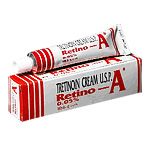
How does this medication work? What are its effects?
Tretinoin (Retin-A) cream and gel is used to treat acne and to treat the skin with fine wrinkles, spots and colored a certain roughness due to sun exposure and age. Tretinoin is a natural form of vitamin A that works by lightening the skin and promote skin renewal.
How should I use this medicine?
Apply once daily at bedtime to lightly cover the areas to be treated.
Do not throw medicines in the wastewater (eg. Not in the sink or in the toilet) or household garbage. Ask your pharmacist how to dispose of unused or expired medicines.
What form this drug is he?
Cream, gel
In which case this drug is it recommended?
People allergic to tretinoin should not take this medication.
What are the possible side effects of this drug?
Local irritation more or less predictable. The side effects are more frequent dry skin, burning, tingling, warmth, redness of the skin, itching, rash, desquamation and a temporary change of skin color.
There may be changes in the skin, indicating an effect of active drug. The expected changes are mild redness and peeling of the skin. In some patients very sensitive skin may become very red, oozing with blisters or crusts. Where appropriate, the application of tretinoin should be discontinued until the skin regains its normal appearance. Subsequent applications will meet the threshold of tolerability. All adverse reactions observed were reversible upon discontinuation.
Are there any other precautions or warnings?
The excessive use of tretinoin should be avoided. To minimize the risk of further skin irritation, avoid putting the product into contact with eyes, eyelids, nostrils, mouth, mucous membranes or any other areas not requiring treatment. Do not apply tretinoin to severely inflamed skin or open sores.
The simultaneous use of abrasives and other irritating skin treatments, including a UV lamp should be avoided.
In some patients, transient skin irritation may occur, especially during the first weeks of treatment. If these responses become excessive, and the skin becomes extremely red, swollen and covered with scabs, treatment with tretinoin should be discontinued and the physician should be consulted.
An apparent worsening may develop due to the drug's effect on deep lesions. This reaction is part of the normal therapeutic effect. Treatment should be continued normally.
Pregnancy: Topical tretinoin should be used by women of childbearing age only after consulting a contraceptive method. Topical tretinoin is not recommended during pregnancy.
Lactation: It is not known whether tretinoin is excreted in breast milk. The physician must decide to require discontinuation of breastfeeding or treatment taking into account the importance of treatment for the mother. Because many drugs are excreted in human milk, caution should be exercised when administering tretinoin to a nursing mother.
Cosmetics may be used but the areas to be treated should be cleaned thoroughly before applying medication. The toilet astringents should be avoided.
Hair removal is permitted (eg.: The clamp, by electrolysis, depilatories) but it must be avoided at night before applying tretinoin as they may cause skin irritation.
The solutions for permanent, waxes, soaps and medicated shampoos can sometimes irritate even normal skin. The patient must be careful not to put these products in contact with the area of skin treated with tretinoin.
Sun exposure and use of tanning lamps may increase irritation. The exposure should therefore be limited or avoided during treatment with tretinoin. People can not avoid strong sun exposure of their profession and / or those with hypersensitivity to the sun should be particularly cautious. If exposure can not be avoided, patients should use sunscreen and wear clothes that cover the treated areas.
Children: The safety and efficacy of this drug in children have not been established.
The product gel is flammable. Note: Keep away from heat and flame. Keep the tube tightly closed.
Local irritation: It is advisable to begin or continue treatment with tretinoin in case of skin irritation (eg. Erythema, desquamation, pruritus, sunburn, etc..), And until symptoms subside .
In some sensitive individuals, tretinoin may cause severe local symptoms such as redness, swelling, itching, warmth, burning or stinging, blistering, crusting and / or peeling at the site of application. If the local irritation is severe, consult your doctor.
Cases of severe irritation on eczematous skin have been reported with the use of tretinoin and patients concerned must be vigilant. If severe or persistent irritation, consult a doctor.
Extreme weather conditions such as wind, cold and low humidity can be irritating to the skin treated with tretinoin and may increase its dryness.
Other drugs could interact with this medicine?
Tretinoin may interact with a number of chemicals and drugs. It is important that patients inform any health care professional about all the medicines he takes, including those that can be obtained without prescription.